International Women's Day 2026
For International Women’s Day, we’re pleased to share reflections from five women at the Institute for Manufacturing (IfM).
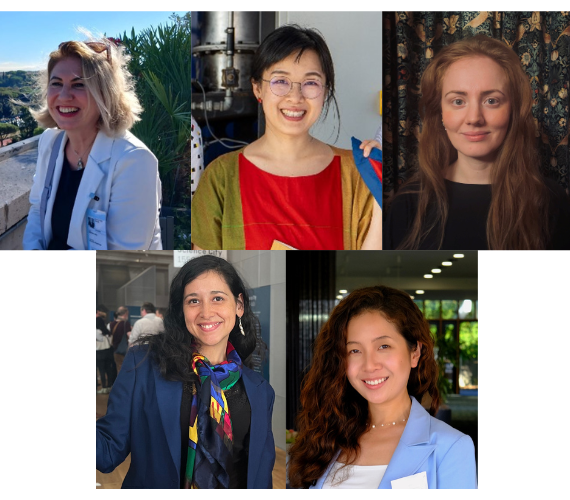
Dr Letizia Mortara (Associate Professor), Dr Curie Park (Research Associate), Dr Viktória Döme (Policy and Impact Lead), Dr Valeria Ramirez (Research Associate) and Xinyan Li (Doctoral Student) speak about the positive changes they’ve seen for women in manufacturing, the individuals who have influenced their professional journeys, and one small, practical action that can help promote and support women’s roles in the sector.
Their perspectives highlight both the progress being made and the importance of continuing to create supportive, inclusive environments across manufacturing.
1. What positive changes have you seen for women in manufacturing?
Letizia: I have not observed dramatic shifts over the years, but consistent and encouraging signs that more balance is in sight. One example I can bring is the Institute for Manufacturing (IfM) and its Manufacturing Engineering Tripos (MET) programme. As a course director I can see how it attracts talented women as well as men from across the world. These students represent the next generation of manufacturing leaders. Seeing women enter advanced manufacturing education in numbers, particularly in globally recognised programmes aimed at supporting the manufacturing industry of tomorrow, suggests that the talent pipeline is becoming more balanced. While progress still feels gradual to me, the presence of capable women preparing for leadership roles is a meaningful development.
Viktória: I think the fact that clear targets are being set and embedded into policy represents a major step forward – one that is highly appreciated but much needed.
Xinyan: I’ve seen women stepping into increasingly diverse roles across manufacturing, from traditional heavy industries to emerging technologies. More women are leading in both front-end innovation and back-end operations. What’s important is that I no longer feel the need to categorise myself differently in my professional life simply because of my gender.
Valeria: Women’s voices are increasingly heard -more clearly and with greater authority - and they are helping to shape meaningful change across organisations. What is particularly positive is that these changes are not only benefiting women, but the industry as a whole and the communities connected to it. One of the most encouraging changes has been the emergence of more nurturing and supportive working environments, alongside leadership models that bring different perspectives on how worth, and value are recognised in the workplace. We are beginning to see more examples of women-led working environments that emphasise care, inclusion, and collaboration. These models of leadership introduce broader ways of assessing value: while productivity and turnover remain important, there is growing recognition of other indicators of success, such as inclusion, strong partnerships, shared values, and networks that strengthen both the value chain (including supply chain!) and the communities that surround it.
Curie: Automation has made machine operation far less physically demanding, which has reduced both the physical and psychological barriers for women entering the field. In my work with small scale plastic upcycling, we have intentionally selected machines that are approachable and manageable for female operators. Although the application is still limited yet, this approach will gradually help broaden participation and build confidence among women in manufacturing.
2. Is there a woman who has significantly influenced or motivated you in your professional journey?
Letizia: There have been many people who shaped my trajectory, both men and women. What stands out most is that I have consistently felt supported by generous and principled mentors who did not frame my contributions through the lens of gender. I have been fortunate that I feel that being a woman did not meaningfully define my professional experience. That, to me, is aspirational – a working environment where capability, curiosity, and contribution matter more than gender or any other characteristics.
Viktória: I’ve been extremely lucky throughout my professional journey, as both my male and female mentors have always been incredibly supportive and genuinely understanding of the challenges women can face in the workplace. That said, my PhD supervisor has been especially inspirational. The way she managed to balance a demanding senior role while raising a family was, and continues to be, a powerful example of what women can achieve.
Xinyan: My grandmother is my greatest inspiration. Forty years ago, she was among the first generation of women working in electronics manufacturing in China. She looked after the entire family while working as a skilled technician, programming machines, and supporting engineers/scientists in turning ideas into reality. Her optimism and courage continue to shape how I approach my own professional journey.
Valeria: Joining the Women in Manufacturing initiative has been a constant source of inspiration and empowerment. I am in awe of the determination and unwavering commitment of the women in this space to bring about positive change with intelligence, kindness, and perseverance. In particular, I have learned a great deal from Jennifer Castaneda-Navarrete, whose leadership has been instrumental to the initiative. She embodies what I would describe as an iron hand in a velvet glove: she works tirelessly to bring people and organisations together around a shared purpose, doing so with quiet determination, professionalism and consistency. Through this approach she not only delivers results, but also demonstrates a thoughtful and steady form of leadership grounded in care and integrity.
Curie: Because of the English name I was given, I often think of Madam Curie, the two-time Nobel Prize winning scientist. Her perseverance, curiosity and resilience continue to inspire me. She certainly paved the way for women in science today, serving as a pioneering figure who rose above educational barriers and institutional sexism with remarkable determination.
3. What’s one small, achievable action that anyone in manufacturing can take to help promote and support women’s roles?
Letizia: A simple but powerful action is to be intentional about inclusion in everyday professional settings. For example: Ensuring women are actively invited in discussions and feel safe in bringing forward their views. Crediting contributions visibly and explicitly. Recommending (and preparing) women for leadership opportunities. Advocating for women in rooms they are not in. Things like these help shape a culture. Environments often change incrementally so it is important that actions are consistent and not “one off”.
Viktória: If you’re working in manufacturing in any capacity, one powerful but simple action is to spread the word about how outdated many perceptions of the sector are. By championing the reality that manufacturing is an exciting, innovative, and impactful space you can encourage more women to see themselves in these roles and feel confident stepping into them.
Xinyan: Be open-minded and truly listen. Whether in everyday meetings or key decision-making moments, making space for different voices can make a meaningful difference.
Valeria: One small but meaningful action anyone in manufacturing can take is to be an active bystander and visibly support the women in the room. From team meetings to large audiences, speaking up can be challenging for any people, but research shows that women often face additional barriers related to social perception and bias, which can lead others to assume they are less capable or experienced than the men present. Promoting gender equity in meetings and community spaces is something easy to do: ensuring women have the opportunity to contribute, meeting their interventions with a welcoming look or a smile, and openly endorsing their ideas where relevant can make a significant difference to their sense of legitimacy and authority. These small gestures help build confidence and create the conditions for women to contribute fully, allowing both the individual and the wider team to make the most of the talent present in the room.
Curie: Creating a genuinely safe and comfortable space for women to express their needs can make a meaningful difference. In my research in rural environments in the Global South, women are still not always encouraged to be proactive or vocal. Providing an environment where they feel at ease can gently encourage them to share their ideas and participate more actively, and lead to positive change in workplace culture.