MET project spotlight: Using satellite data to strengthen environmental auditing of global supply chains

A key feature of the Manufacturing Engineering Tripos (MET), an option for the final two years of an engineering degree at the University of Cambridge, is the opportunity for fourth-year students to undertake an individual long project, applying the technical, analytical and leadership skills developed throughout the course to real-world challenges. Through close collaboration with industry and research partners, these projects enable students to explore emerging technologies and deliver meaningful impact.
MET student Benedetta Radice Fossati Confalonieri completed her project with the Global Supply Chain Observatory (GSCO), part of the Industrial Resilience Research Group at the Institute for Manufacturing (IfM). The GSCO maps, monitors and stress-tests supply chains in near real time. Using AI, satellite remote sensing and more than 244,000 interconnected data relationships across 210 countries, the team is tackling questions of economic security, industrial resilience and sustainability on a global scale.
Working with PhD researcher Edison Li, Research Associate Dr Deepesh Jayasekara and Dr Mukesh Kumar, Head of the Industrial Resilience Research Group, Benedetta developed a digital environmental auditing tool that uses satellite data to assess the environmental impact of critical material supply chains. The project explored how satellite-derived indicators could be used responsibly within environmental assessment and environmental, social and governance (ESG) reporting.
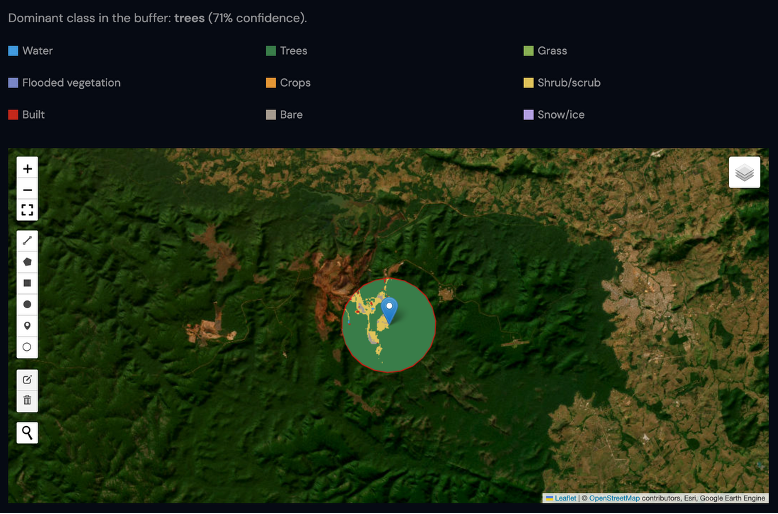
Map showcasing data regarding land use, overlaying a satellite image.
The project began by understanding the GSCO’s needs and long-term ambitions as the platform continues to expand and attract new customers. Drawing on skills developed throughout the MET programme, particularly through industrial placements, Benedetta worked closely with stakeholders to ensure the tool was tailored to the GSCO’s requirements and future direction.
The resulting system expands the GSCO’s environmental auditing capability from a monitoring platform into a decision-support tool for policymakers and multinational corporations. For organisations with limited auditing resources, it can help identify which suppliers require more detailed investigation. For policymakers, it offers a potential mechanism for assessing whether environmental regulations are having the intended effect within a region. The tool also includes an indicator library that can support non-specialists in understanding the evolving landscape of ESG compliance.
“It should stand as evidence for policymakers involved in reporting directives, that satellite data, handled transparently, can serve as an auditing instrument,” Benedetta says. “In doing so, this tool could represent a starting point for the introduction of satellite data as a legally accepted source within ESG reporting.”
“Benedetta’s work builds on an earlier MET Long Project and greatly extends the GSCO platform's digital auditing capability,” comments Edison. “By advancing its satellite analysis, structuring the tool around different user perspectives, and adding tailored reporting features, she has made GSCO's digital auditing insights more actionable, helping policymakers and businesses translate environmental evidence into real-world decisions.”
A significant aspect of the project was the use of large language models (LLMs), such as Claude, to support development. “The key takeaway from the project was learning how to transform LLMs into partners to complete a project more thoroughly and in a short amount of time,” Benedetta reflects.
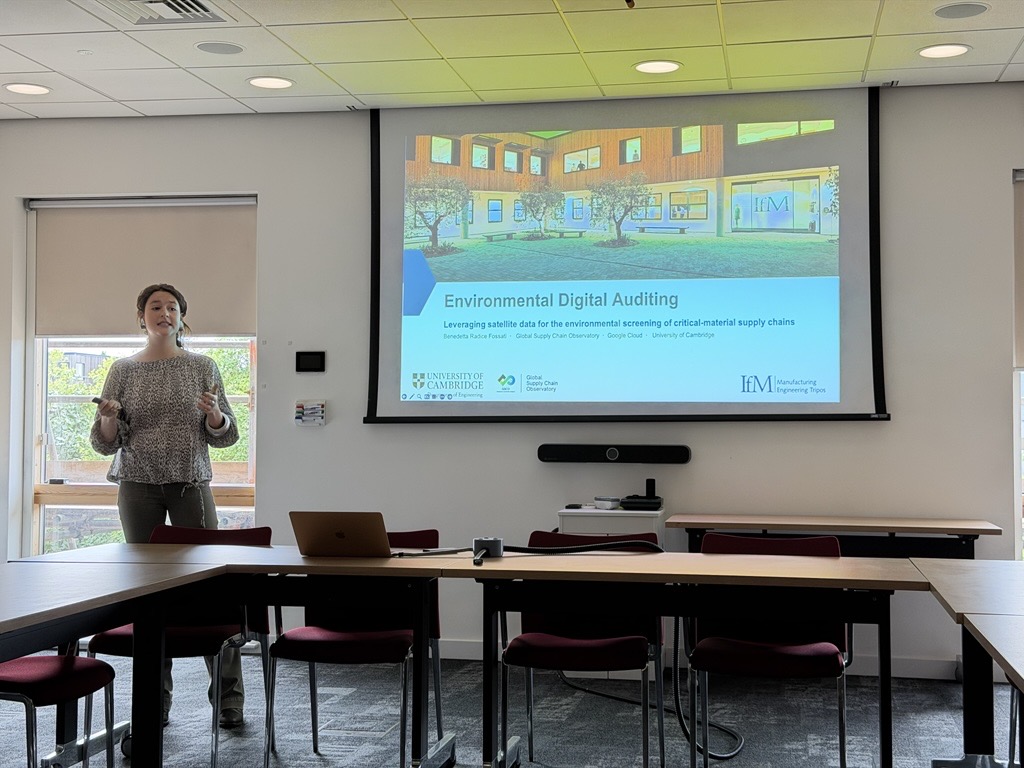
“At the beginning, I often felt overwhelmed by the quantity of information Claude was providing for each prompt, as well as the lack of autonomy and satisfaction of the LLM-human collaboration. By the end of the project, Claude had become my ‘teammate’, inflating my productivity enormously. I am looking forward to helping the GSCO utilise the tool in convincing policymakers to employ satellite data as legally accepted environmental auditing evidence.”
Letizia Mortara, MET IIB Course Director and Associate Professor at the IfM, adds: “The Individual Long Projects are the culmination of the MET students’ academic journey, where they perfect their ability to understand industry needs and tackle pressing real-world challenges. Students draw on the knowledge they acquired across disciplinary boundaries and, thanks to their previous projects industry engagement, identify and match the right resources to a problem and develop practical solutions, working alongside an industry partner or IfM research group.”
Find out more about the MET course, and its practical, hands-on learning approach: https://www.ifm.eng.cam.ac.uk/education/met/